
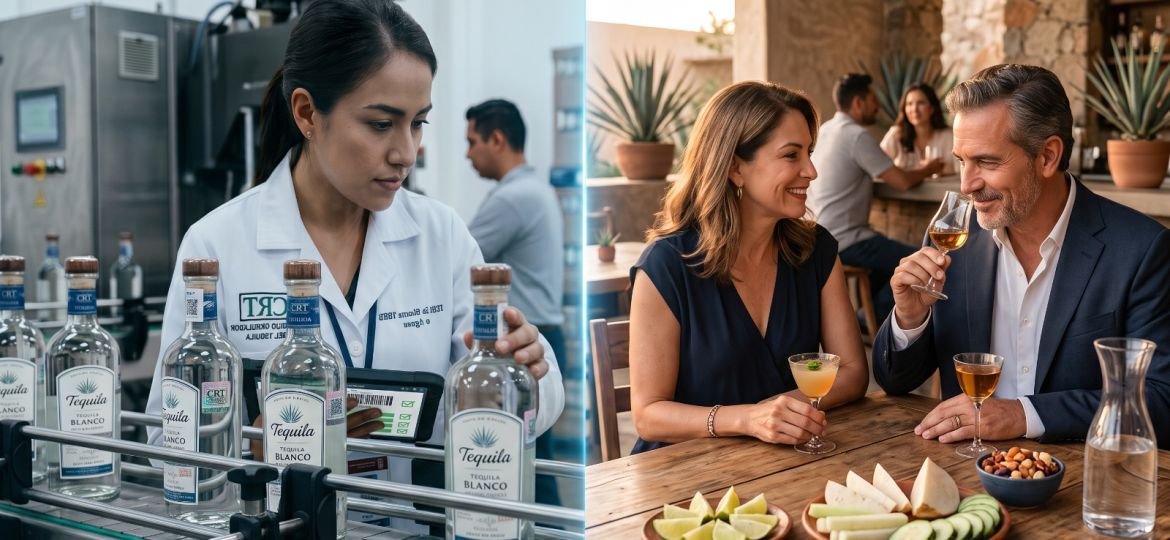
Health and the economy are the two main fronts in the fight against pirated production.
The tequila industry, Mexico’s agro-industrial and cultural emblem in international markets, faces a threat that goes beyond commerce: the proliferation of adulterated and counterfeit beverages. While the agave-tequila supply chain generates thousands of direct jobs and strategic foreign exchange, the illicit liquor market undermines tax collection and endangers consumers’ lives through the clandestine use of industrial solvents like methanol.
Data from the Comisión para la Industria de Vinos y Licores (CIVyL) and the SAT (Mexico’s tax authority) reveal that nearly four out of ten bottles consumed in the country come from informal channels, representing over 19 billion pesos in annual tax evasion. In stark contrast, tequila operates under one of the strictest traceability schemes in the world, regulated by NOM-006-SCFI-2012 and permanently certified by the Consejo Regulador del Tequila (CRT).
Joint operations between the FGR, Cofepris, and the CRT have led to the seizure and destruction of hundreds of thousands of liters of counterfeit products. Official investigations confirm that adulteration networks frequently buy original tequila bottles from bars and nightclubs to refill them with toxic mixtures.
Consuming denatured alcohol or trace methanol can cause severe metabolic acidosis, permanent neurological damage, blindness, and even death within hours. To safeguard public health and the Denominación de Origen, the agave industry promotes three key filters:
- Digital verification: Scanning the QR code on the official SAT marbete (tax stamp) to validate origin and batch.
- Seal authenticity: Checking the CRT hologram, intact cap, and untampered label.
- Bottle destruction: Disabling and scratching empty bottles at consumption centers to break the refill chain.
