
The Paisaje Agavero (Agave Landscape) is facing a critical turning point. Following a five-year historic boom where Agave tequilana Weber reached record highs of up to 32 pesos per kilo, prices have now collapsed to between 5.00 and 5.65 pesos per kilo. This plunge has opened a severe profitability gap for thousands of campesino farming families across the states covered by the Denominación de Origen Tequila (DOT).
This downturn is driven by a structural oversupply built up between 2018 and 2022, a period when the “blue gold” rush triggered an aggressive expansion of crops across both traditional farmland and makeshift plots. Data from Banco de México (Banxico), analysis from the Cámara Nacional de la Industria Tequilera (CNIT), and agricultural market reports from El Economista confirm that while production and maintenance costs continue to rise, the glut of supply is severely squeezing smallholders who lack corporate purchasing agreements.
For large distilleries, this market correction brings welcome relief to raw material costs and operating margins. For independent growers, however, the fallout is devastating: parcels that took up to seven years to mature now risk being harvested at razor-thin margins or outright net losses.
This crisis demands a fundamental rethink of the agricultural cycle. Without long-term crop planning mechanisms, fair-price contract farming, and value-added strategies, market volatility will keep punishing the most vulnerable link in the supply chain of Mexico’s national spirit.
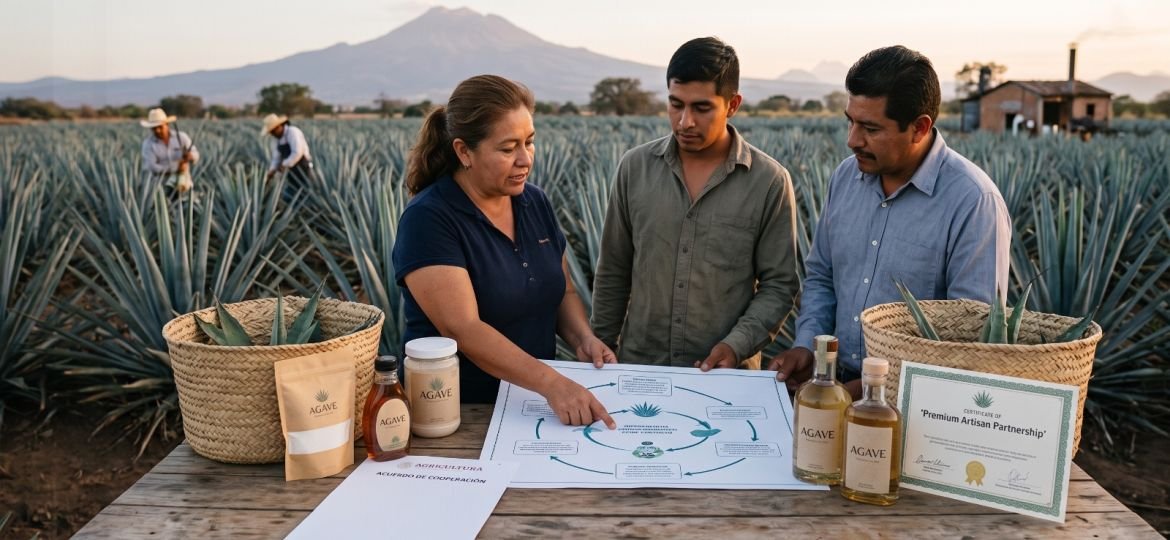
Navigating this crossroads toward economic stability requires viable transitional models. Key pathways include binding contract-farming frameworks, agricultural cooperatives, and product diversification into agave derivatives such as inulin, syrups, and biomaterials.
At the same time, adopting environmental traceability standards—such as the Agave Responsable Ambiental (ARA) certification—alongside direct partnerships with premium artisanal distilleries presents a major opportunity: turning raw agave into a differentiated asset valued for its sustainability and provenance, securing a fair premium that shields farm income from volatile open-market swings.
