
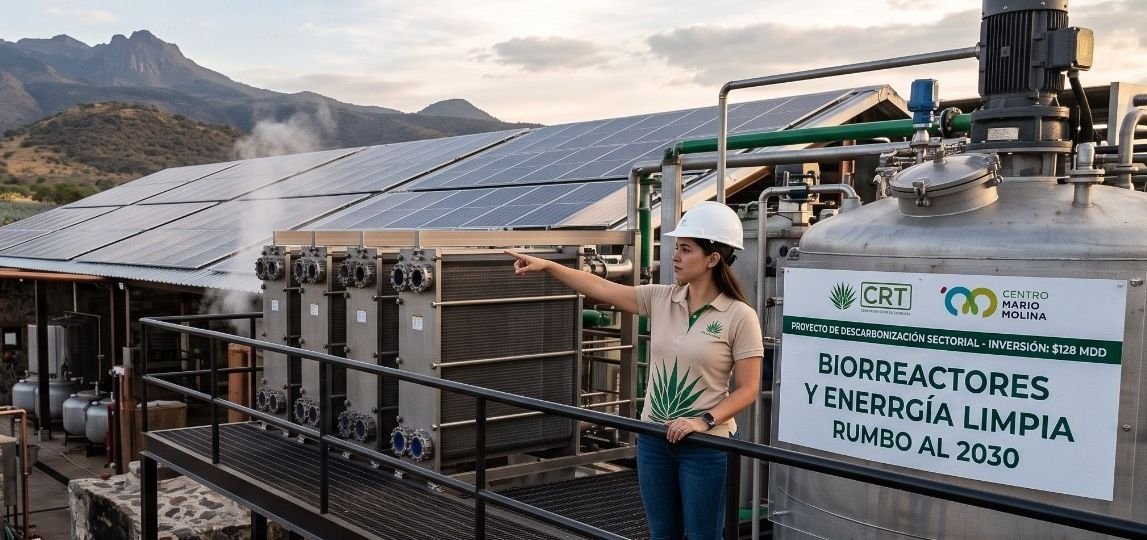
The tequila agro-industry is establishing itself as a benchmark for global sustainability. Far from the traditional narratives of environmental impact, the sector has invested over 128 million dollars in ecological transition projects. This massive financial injection translates into state-of-the-art technology installed across distilleries: advanced bioreactors for vinazas (stillage) treatment, clean biomass boilers, solar panels, and the systematic replacement of fossil fuels.
Hand in hand with the prestigious Centro Mario Molina, the Consejo Regulador del Tequila (CRT) updated its Sustainability Strategy with rigorous goals leading up to 2030. The plan aims not only to reduce the sector’s direct carbon footprint by 25% but also to optimize water resource management. The targets for the end of the decade are definitive: a 15% reduction in water consumption per unit produced and an 80% increase in the volume of treated water.
With this green armor, tequila proves that its export value lies not only in its denomination of origin or its flavor, but in a steadfast environmental commitment that redefines the future of spirits.
