
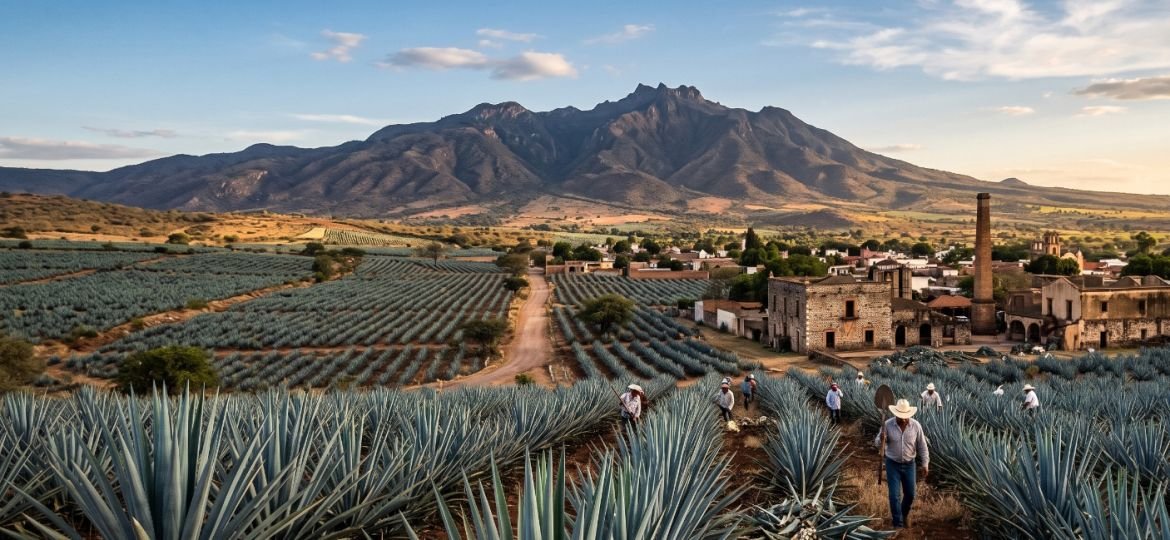
This July 12, 2026, marks two decades since UNESCO inscribed the Paisaje Agavero (Agave Landscape) and Ancient Industrial Facilities of Tequila onto the World Heritage List. This protected territory spans 34,658 hectares connecting the municipalities of El Arenal, Amatitán, Tequila, Magdalena, and Teuchitlán, integrating cultivation fields of Agave tequilana Weber variedad azul with historic industrial infrastructure from the 16th to the 20th centuries.
The declaration under the Cultural Landscape category recognizes a continuous relationship between the natural environment and human intervention. Here, blue agave functions not just as a commercial raw material, but as a cultural plant whose domestication and agricultural management shape the regional identity and the technological mestizaje between pre-Hispanic processes and European distillation.
Twenty years after this milestone, the technical assessment demands a review of land management challenges. The growth of the agro-industry and the pressure of mass tourism highlight the regulatory need to balance economic development with environmental conservation and the protection of the social fabric of local communities. The current challenge lies in ensuring that management plans guarantee the preservation of this heritage site for future generations.
