
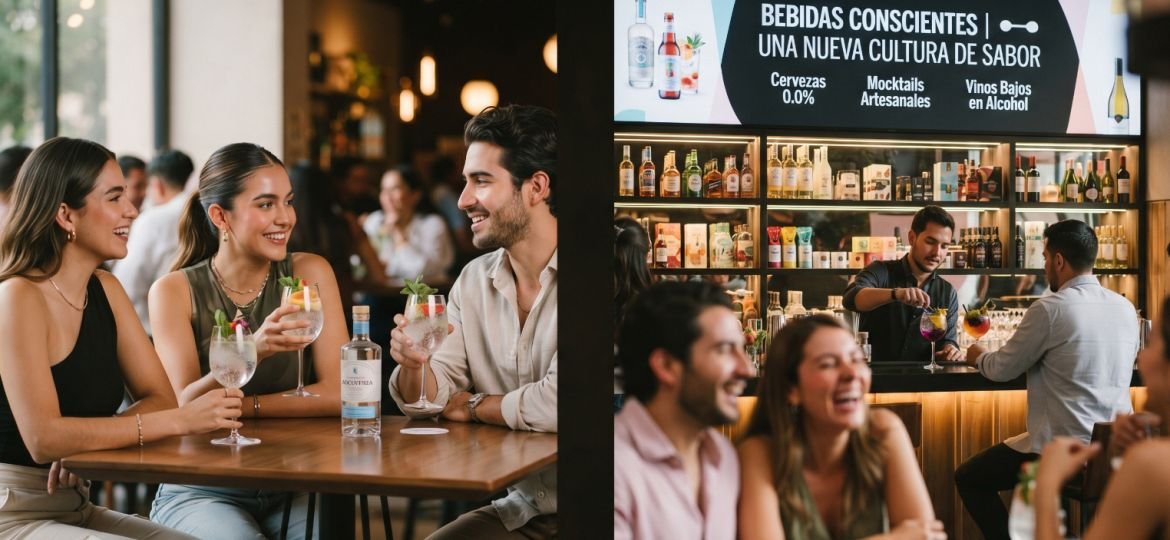
The global beverage ecosystem is undergoing a quiet revolution. According to consolidated data from the Encuesta Nacional de Consumo de Drogas, Alcohol y Tabaco (National Survey of Drug, Alcohol, and Tobacco Consumption), alcohol consumption among adolescents and young adults in Mexico has seen a steady decline in recent years. This shift is mirrored in Gallup metrics, which report that only 50% of adults aged 18 to 34 drink alcohol regularly—a sharp drop from the 72% recorded two decades ago.
This evolution in social habits has forced major producers to overhaul their business models. Instead of leaning into traditional narratives of mass consumption or wild partying, the industry has chosen to diversify and innovate through a “smart consumption” lens. Global brands and key breweries have begun allocating up to 20% of their advertising budgets exclusively to promoting moderation, shifting their portfolios toward lower-ABV products, low-alcohol Ready To Drink (RTD) formats, and the crown jewel of the movement: the 0.0% beverage sector.
Consultancies like IWSR note that the non-alcoholic and low-alcohol market is on track for a steady annual growth projection of between 5% and 8% by the close of 2026. Utilizing sophisticated processes such as vacuum distillation or reverse osmosis, the sector has mastered removing ethanol from spirits and beers without sacrificing the sensory complexity of the drinks.
For iconic industries and the hospitality sector, alcohol isn’t disappearing—it is being redefined. Companies view this shift not as a crisis, but as a window of opportunity to connect with a younger, more transparent, sophisticated, and demanding consumer; one who visits a bar looking for genuine human connection, rather than excesses that compromise their health.
